Table of Contents
How To Start A Career In Microsoft Dynamics 365: A Beginner’s Guide To Modules, Opportunities & Global Trends in 2026

Are you looking to start a career in Microsoft Dynamics 365? Tech Pratham brings you a simple and complete guide to understand this powerful business platform. In this guide, you will learn about the main modules of Dynamics 365, the career opportunities it offers, and the latest global trends in 2026. Whether you are new to IT or looking to grow your skills, this guide will help you get started and build a successful career in areas like finance, operations, sales, and customer service.
What is Microsoft Dynamics 365 and Why Should You Learn It in 2026?
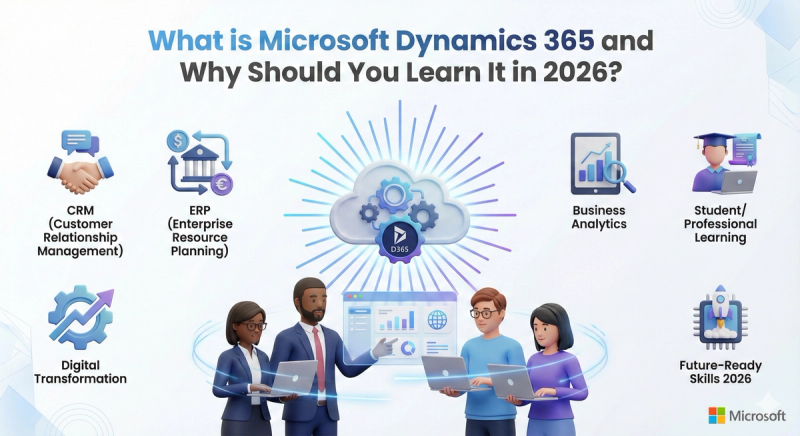
Microsoft Dynamics 365 is a cloud-based business platform that brings together Customer Relationship Management (CRM) and Enterprise Resource Planning (ERP) tools in a single, unified system. It helps organizations manage core business processes such as sales, marketing, customer service, finance, supply chain, and human resources efficiently. Unlike traditional software, Dynamics 365 is highly flexible, scalable, and integrates seamlessly with other Microsoft products like Power BI, Office 365, and Azure, enabling companies to automate processes, analyze data, and make smarter business decisions.
The importance of learning Microsoft Dynamics 365 in 2026 cannot be overstated. Businesses worldwide are increasingly moving to cloud-based platforms to improve efficiency, reduce operational costs, and provide better customer experiences. As a result, the demand for skilled Dynamics 365 professionals is growing rapidly, creating abundant career opportunities across industries such as IT, finance, retail, healthcare, and manufacturing.
By learning Dynamics 365, you can pursue roles like Dynamics 365 consultant, functional analyst, developer, or administrator. These roles not only offer attractive salaries but also allow you to work on innovative projects involving automation, artificial intelligence, and data analytics. Additionally, acquiring expertise in Dynamics 365 helps you stay ahead of technological trends, equips you with future-ready skills, and ensures long-term career growth in a competitive global job market.
In short, Microsoft Dynamics 365 is more than just software—it is a gateway to a modern, dynamic career. Whether you are starting your professional journey or looking to upskill, learning Dynamics 365 in 2026 can position you as a valuable asset to organizations worldwide, opening doors to diverse opportunities and professional success.
Microsoft Dynamics 365 Modules and Which One is Best for You ?
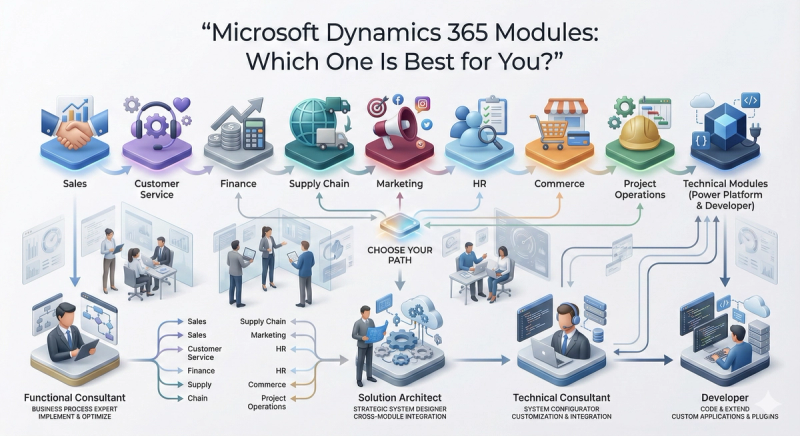
Microsoft Dynamics 365 is a versatile business platform, and one of its biggest strengths lies in its modular structure. Each module focuses on a specific business area, allowing organizations to implement only what they need and scale as required. For beginners or professionals looking to start a career in Dynamics 365, understanding these modules is crucial to choosing the right path. Tech Pratham brings you a clear guide to help you make the best decision.
Key Microsoft Dynamics 365 Modules (Functional + Technical)
Microsoft Dynamics 365 Sales (Functional)
Purpose: Helps businesses manage leads, opportunities, and customer relationships.
Key Features: Sales automation, forecasting, pipeline management, and analytics.
Best For: People interested in sales processes, customer engagement, and CRM management.
Microsoft Dynamics 365 Customer Service (Functional)
Purpose: Enhances customer support and engagement through an intelligent service platform.
Key Features: Case management, service scheduling, knowledge base, AI-powered support insights.
Best For: Those who enjoy problem-solving, customer interaction, and service operations.
Microsoft Dynamics 365 Finance (Functional)
Purpose: Streamlines financial operations and enables real-time visibility into business performance.
Key Features: General ledger, accounts payable/receivable, budgeting, financial reporting.
Best For: Finance professionals, accountants, and individuals looking for analytical roles in finance.
Microsoft Dynamics 365 Supply Chain Management (Functional)
Purpose: Optimizes production, logistics, and inventory operations.
Key Features: Inventory management, procurement, manufacturing, warehouse automation.
Best For: People interested in operations, logistics, and process optimization.
Microsoft Dynamics 365 Marketing (Functional)
Purpose: Automates marketing campaigns and enhances customer lifecycle engagement.
Key Features: Email marketing, customer journeys, lead nurturing, analytics.
Best For: Digital marketers and marketing automation professionals.
Microsoft Dynamics 365 Human Resources (HR) (Functional)
Purpose: Simplifies and automates HR operations and workforce management.
Key Features: Onboarding, performance management, leave tracking, benefits administration.
Best For: HR professionals and those interested in employee lifecycle management.
Microsoft Dynamics 365 Commerce (Functional)
Purpose: Manages retail and e-commerce operations across online and in-store channels.
Key Features: Point-of-sale, promotions, product catalog, customer buying experience insights.
Best For: Retail professionals and e-commerce specialists.
Microsoft Dynamics 365 Project Operations (Functional)
Purpose: Supports project planning, resource management, and project financials.
Key Features: Budgeting, project billing, resource allocation, time tracking.
Best For: Project managers, consultants, IT and professional service firms.
Microsoft Dynamics 365 Technical Modules
Dynamics 365 Power Platform (Technical)
Purpose: Enables custom app development and automation without needing deep coding.
Components: Power Apps, Power Automate, Power BI, Power Virtual Agents.
Best For: Technical enthusiasts, automation developers, low-code/no-code developers.
Dynamics 365 Developer / Technical Consultant
Purpose: Customizes and extends Dynamics 365 using programming frameworks.
Key Skills: C#, .NET, JavaScript, Power Apps, Plugins, Workflows, Custom Development, API Integration.
Best For: Software developers and technical problem solvers.
Dynamics 365 Solution Architect (Advanced Technical)
Purpose: Designs end-to-end enterprise architecture using Dynamics 365 and Microsoft Cloud.
Key Skills: Integration solutions, cloud architecture, Azure services, DevOps, system design.
Best For: Experienced consultants and architects.
Dynamics 365 Integration & Azure (Technical)
Purpose: Connects D365 with third-party apps and enterprise systems.
Key Tools: Azure Logic Apps, Azure API Management, Dataverse, Connectors.
Best For: Integration engineers and cloud professionals.
Dynamics 365 System Administration (Technical)
Purpose: Manages environments, security, data, and system performance.
Key Responsibilities: User roles, security setup, backups, lifecycle configuration management.
Best For: IT administrators and system support engineers.
Which Module Should You Choose?
Tech Pratham recommends choosing a module based on your interests, career goals, and background:
- If you enjoy finance and analytics, Finance or Supply Chain Management could be ideal.
- If you love interacting with clients and managing relationships, Sales or Customer Service modules are perfect.
- For those passionate about marketing and digital campaigns, the Marketing module is a great choice.
- If you are interested in HR and workforce management, the Human Resources module offers career growth.
- For people inclined toward retail or e-commerce, Commerce provides exciting opportunities.
- For project-based roles, Project Operations helps build skills in planning and execution.
Pro Tip from Tech Pratham: You don’t have to limit yourself to one module. Many professionals start with one module and gradually expand their expertise across multiple areas, making them highly valuable in the job market.
How to Become a Microsoft Dynamics 365 Consultant
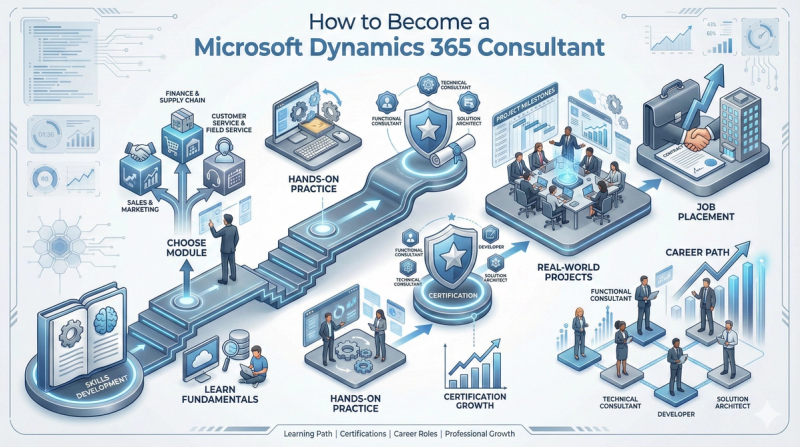
Becoming a Microsoft Dynamics 365 Consultant is a highly rewarding career choice for professionals who want to work with one of the most versatile and in-demand business platforms today. Tech Pratham recommends starting by gaining a strong understanding of the Dynamics 365 ecosystem and its key modules, such as Sales, Finance, Customer Service, Supply Chain Management, or Human Resources. Choosing a module that aligns with your interests and career goals is the first step toward specialization.
Next, pursuing official Microsoft Dynamics 365 certifications is essential to validate your skills and increase your marketability. Certifications like Dynamics 365 Fundamentals (MB-910/MB-920), Functional Consultant Associate (MB-300, MB-500, MB-600), and advanced certifications in specific modules can help you demonstrate your expertise to potential employers. Alongside certifications, hands-on experience is critical. Tech Pratham emphasizes practicing in demo environments, participating in internships, or working on real projects to understand how the platform solves real-world business problems.
In addition to technical knowledge, successful Dynamics 365 Consultants must have strong analytical skills, problem-solving abilities, and effective communication. Consultants often interact directly with clients to gather requirements, provide solutions, and ensure smooth implementation of the platform. Knowledge of business processes, project management, and integration with other Microsoft tools like Power BI, Azure, and Office 365 can further enhance your profile.
By combining certifications, practical experience, and soft skills, you can position yourself as a skilled Dynamics 365 Consultant. This role opens doors to high-demand opportunities across industries such as IT, finance, healthcare, retail, and manufacturing. With the growing adoption of cloud-based enterprise solutions, a career as a Microsoft Dynamics 365 Consultant in 2026 offers both professional growth and long-term job security.
Microsoft Dynamics 365 Future Scope and Salary Trends
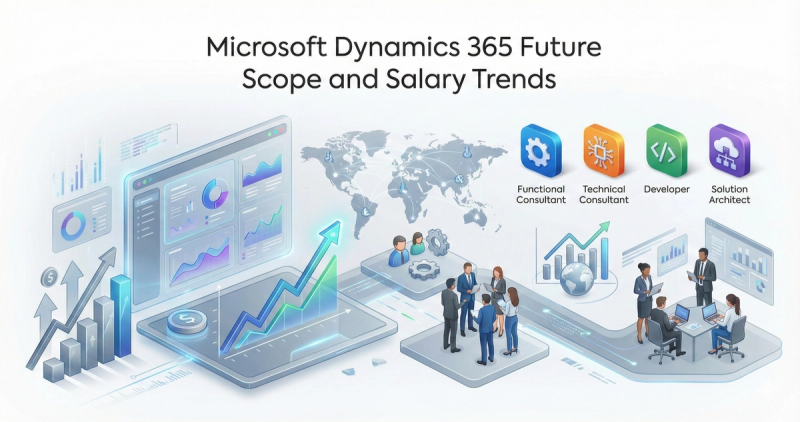
Microsoft Dynamics 365 has a very promising future as more businesses worldwide adopt cloud-based ERP and CRM solutions. Companies are moving away from legacy systems and choosing modern, integrated platforms to streamline operations. This shift ensures that skills in Dynamics 365 remain highly relevant and in demand.
The platform is widely used across industries like IT, finance, healthcare, manufacturing, retail, and e-commerce, making it versatile for professionals who want opportunities in multiple sectors. With the rise of hybrid and remote work, professionals can work on global projects, collaborating with international clients. As businesses implement more complex solutions involving integrations, automation, analytics, and AI, certified and experienced Dynamics 365 professionals are increasingly sought after.
Career Opportunities and Salary Trends
Salary for Microsoft Dynamics 365 professionals varies based on role, experience, specialization, and location. Here’s a quick overview:
- Entry / Junior Level: Around ₹4–8 LPA in India, suitable for fresh graduates or beginners.
- Mid-Level / Functional Consultant / CRM Consultant: Typically ₹10–22 LPA, depending on experience and module specialization.
- Experienced / Senior Roles (ERP/F&O Consultant, Solution Architect, Multi-Module Specialist): Can earn ₹25–40 LPA or more, especially for client-facing or international projects.
Globally, roles such as Functional Consultant, Developer, and Solution Architect can earn between $75,000 and $150,000 per year. Freelance or contract opportunities also offer higher earnings for professionals with advanced skills and certifications.
Why Microsoft Dynamics 365 is a Great Career Choice
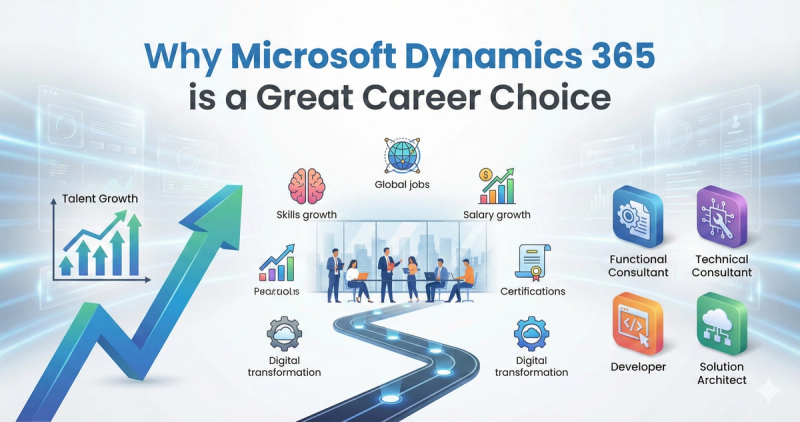
- Growing demand across industries ensures long-term career stability.
- High-paying opportunities for certified and skilled professionals.
- Remote and global project options expand career possibilities.
- Specializing in high-demand modules like Finance & Operations, Supply Chain, or Customer Service can boost growth.
- Hands-on experience and certifications enhance your credibility and employability.
By learning Microsoft Dynamics 365 now, you can position yourself for a successful, high-paying, and future-ready career in 2026 and beyond. Following guidance from Tech Pratham, focusing on certifications, practical projects, and in-demand modules will give you a competitive advantage in the global job market.
Roadmap to Learn Microsoft Dynamics 365 – by Tech Pratham
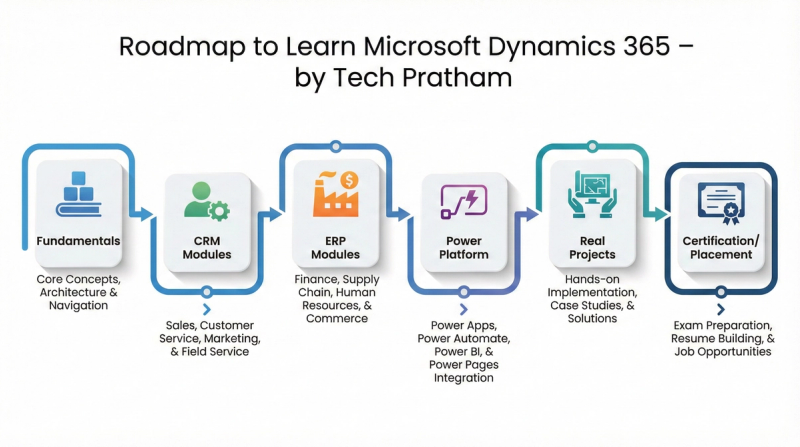
1. Understand the Basics
Before diving into Dynamics 365, get familiar with fundamental concepts:
- ERP & CRM Concepts: Learn what Enterprise Resource Planning (ERP) and Customer Relationship Management (CRM) are and their business uses.
- Business Processes: Understand finance, sales, marketing, supply chain, HR, and customer service workflows.
- Cloud Basics: Dynamics 365 is cloud-based, so get comfortable with Microsoft Azure fundamentals
2. Get Familiar with Dynamics 365
- Learn the Dynamics 365 ecosystem:
- Modules: Sales, Customer Service, Field Service, Finance, Supply Chain Management, Human Resources, Marketing, Commerce, Project Operations.
- Power Platform Integration: Power BI (analytics), Power Apps (apps), Power Automate (automation), Power Virtual Agents (chatbots).
- Explore Dynamics 365 interface, navigation, and basic customization.
3. Choose Your Focus Module
Based on your career goal, pick a module to specialize in:
- Finance & Operations (ERP): For finance, operations, supply chain roles.
- Sales & Customer Service (CRM): For sales automation, customer support, and marketing.
- Human Resources (HR): For HR process automation.
- Field Service & Project Operations: For service delivery and project management.
4. Learn Customization & Configuration
- Understand security roles, user management, and licensing.
- Learn to customize entities, forms, views, and dashboards.
- Explore business process flows, workflows, and automation.
5. Learn Advanced Skills
- Power Platform Skills:
- Build custom apps with Power Apps.
- Create automations with Power Automate.
- Design analytics dashboards with Power BI.
- Integration & Extensibility: Learn APIs, connectors, and third-party integrations.
- Development (Optional): Explore Dynamics 365 SDK and C#/.NET for deeper customization.
6. Hands-On Practice
- Sign up for a Microsoft Dynamics 365 trial account.
- Practice real-world scenarios: managing leads, automating workflows, generating reports.
- Build a portfolio of solutions and customizations.
(Tech Pratham emphasizes hands-on practice as the fastest way to learn.)
7. Certification
Microsoft certifications validate your expertise:
- Fundamentals:
- Microsoft Certified: Dynamics 365 Fundamentals (ERP or CRM focus)
- Role-Based Certifications:
- Functional Consultant: Sales, Customer Service, Finance, Supply Chain, HR
- Developer: Microsoft Certified: Dynamics 365 Developer Associate
8. Keep Updated
- Follow Microsoft Learn for tutorials and updates.
- Join Dynamics 365 communities on LinkedIn, forums, and GitHub.
- Explore latest trends like AI integration, automation, and analytics.
9. Career Path
- Functional Consultant – Designs processes and configures solutions.
- Technical Consultant/Developer – Customizes and develops Dynamics 365 solutions.
- Solution Architect – Designs end-to-end Dynamics 365 implementations.
- Business Analyst – Translates business needs into Dynamics 365 solutions.
Conclusion
Starting a career in Microsoft Dynamics 365 in 2026 presents an exciting opportunity to enter one of the most in-demand areas of the IT and business world. With its modular structure, seamless integration with Microsoft products, and wide adoption across industries, Dynamics 365 equips professionals with future-ready skills in finance, operations, sales, marketing, HR, and more. By understanding the modules, choosing a focus area aligned with your interests, gaining hands-on experience, and earning relevant certifications, you can build a rewarding career as a Dynamics 365 Consultant, Developer, Functional Analyst, or Solution Architect. The platform not only offers competitive salaries and global opportunities but also ensures long-term career growth in a rapidly evolving digital landscape. Following Tech Pratham’s roadmap, beginners and professionals alike can confidently navigate this journey, positioning themselves as valuable assets in the global job market and unlocking a dynamic, high-growth career path with Microsoft Dynamics 365.